Harmonic analysis, drawn on the score
Attach a MusicXML file in Claude or ChatGPT and ask what is happening in the music. You get the engraved score with the analysis marked on it, the way a theory teacher would pencil it in, plus a short written commentary.
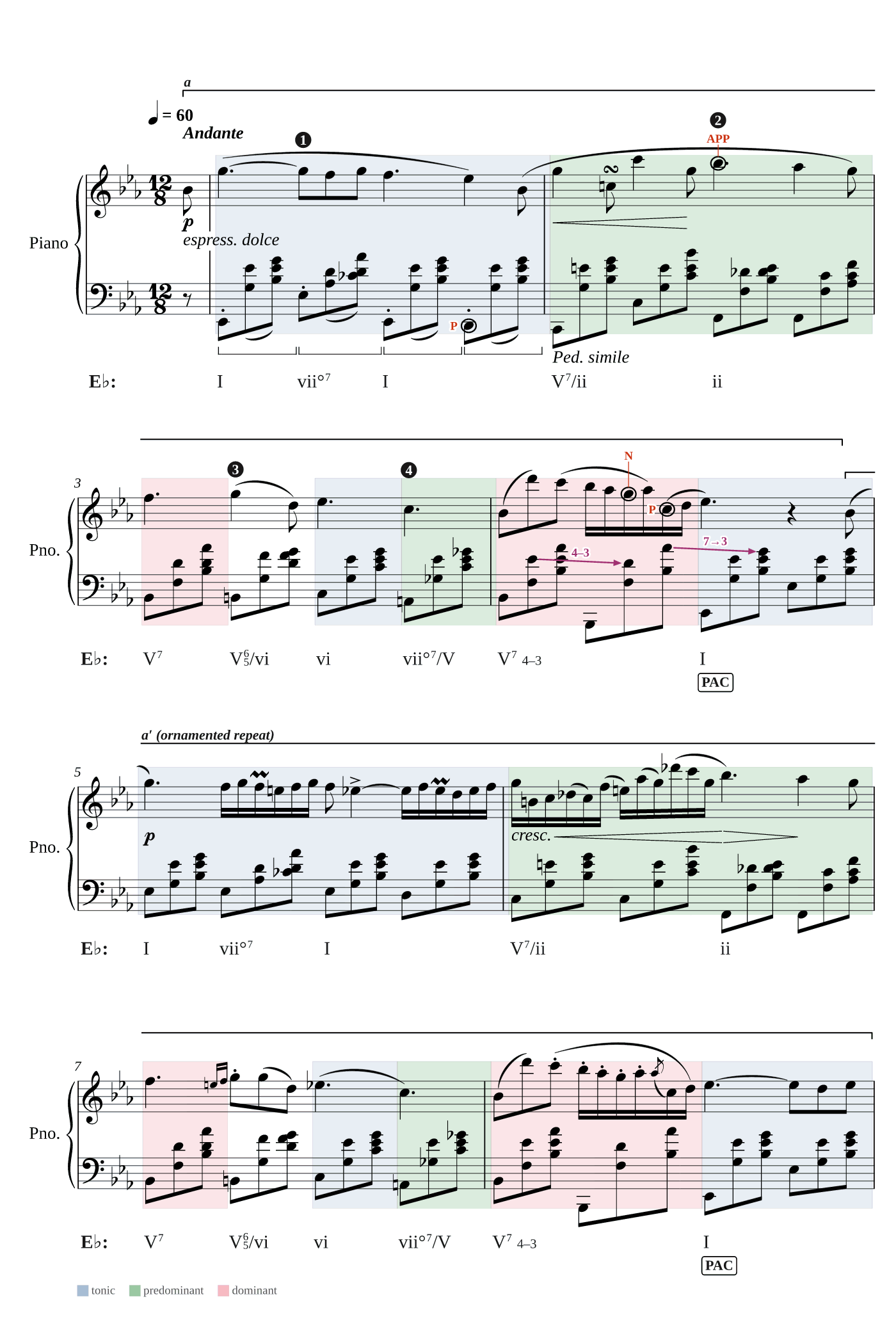
Chopin, Nocturne Op. 9 No. 2, bars 1–8. Tap or click to enlarge. PDF
What it marks
- The chords: each chord is labelled under the music with a Roman numeral (I, IV, V…), which says which note of the key the chord is built on. Coloured bands show the chord's job: blue for "home" (tonic), green for "moving away" (predominant), red for "pulling back home" (dominant).
- Endings and phrases: cadences, the musical equivalent of commas and full stops, are boxed; brackets above the music show where each phrase, like a sentence, begins and ends.
- Notes outside the chord: melody notes that don't belong to the chord underneath, such as passing notes that connect two chord notes, are circled and named.
- How the parts move: arrows follow a note as it moves to its next note, where that movement matters, for example a tense note settling onto a calm one.
- A written explanation: numbered circles on the page match numbered paragraphs in the chat reply, which say what you might have expected at that moment and what the composer did instead.
How it works
- A model draftsA computer model that learned from hundreds of pieces analysed by experts reads every note and suggests the keys, chords, cadences and phrases.
- The chat model reviewsClaude or ChatGPT checks that draft against the actual notes, fixes mistakes, and picks out what is worth pointing out to you.
- The score is drawnThe analysis is printed onto a properly engraved copy of the score, as an image and a PDF. Nothing is drawn by an image-generating AI.
Three views of the same passage
When the full page is too busy, ask for one layer at a time: the chords (harmony), how the individual parts move (voice leading), or how the piece is built from phrases (form).
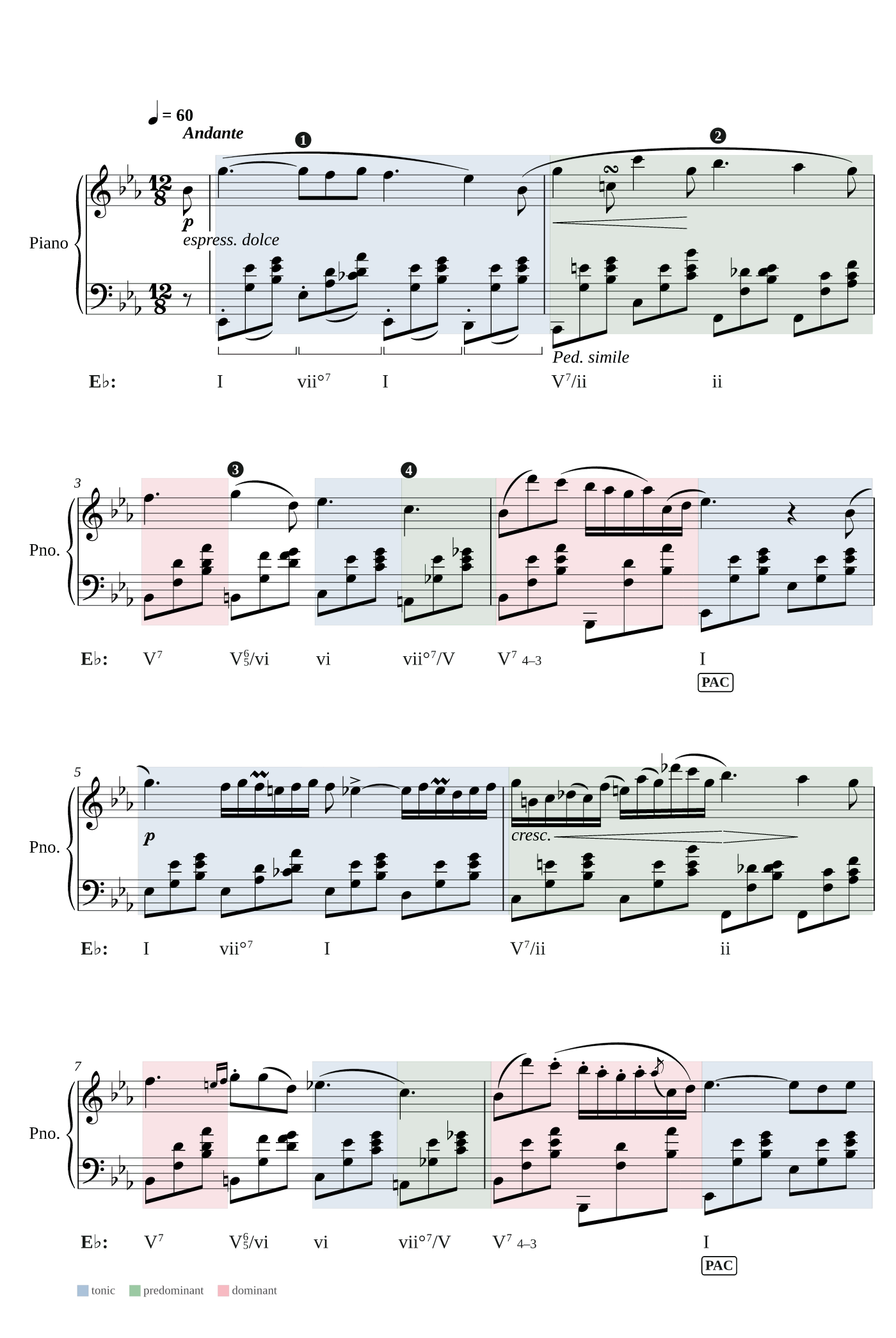
Harmony
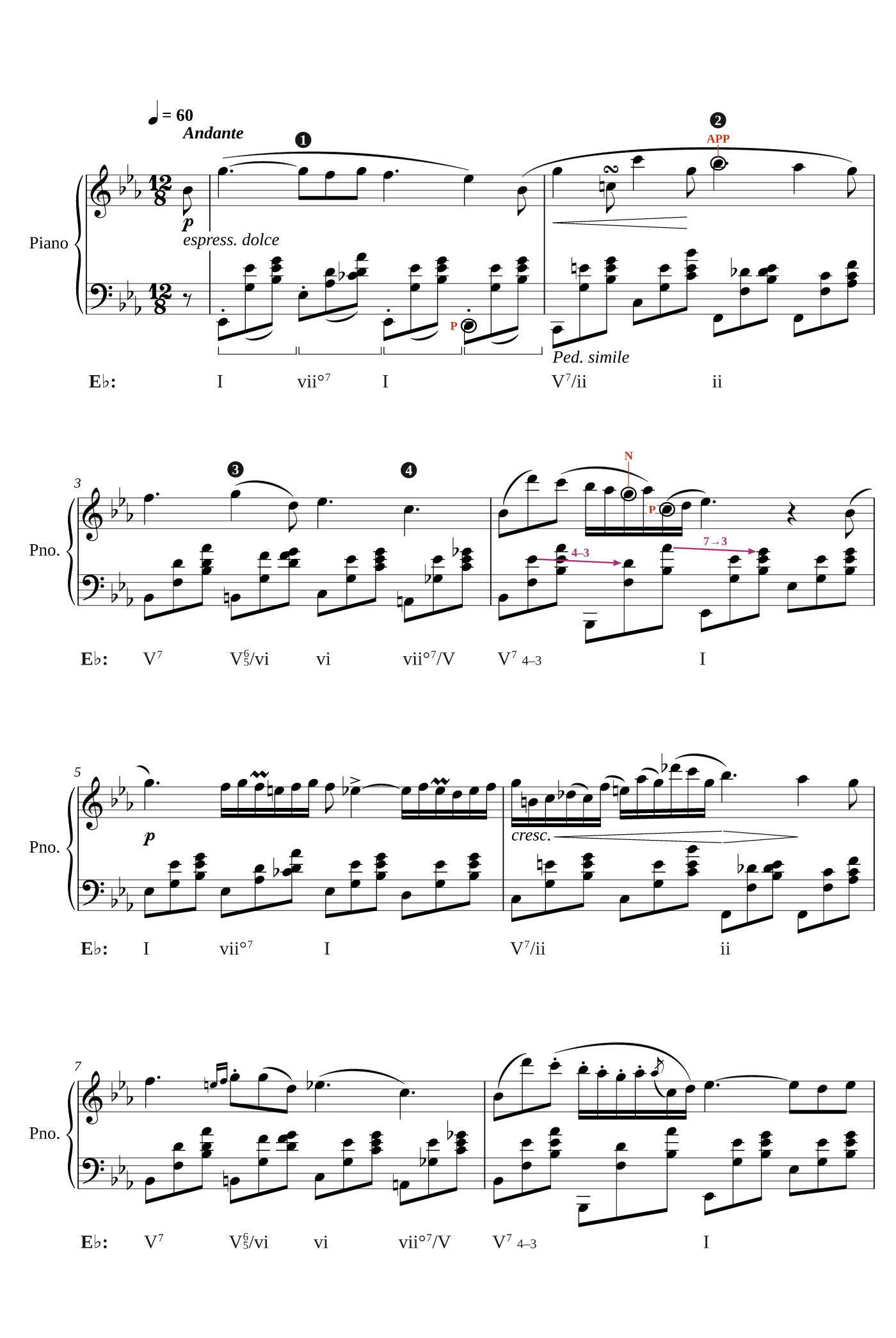
Voice leading
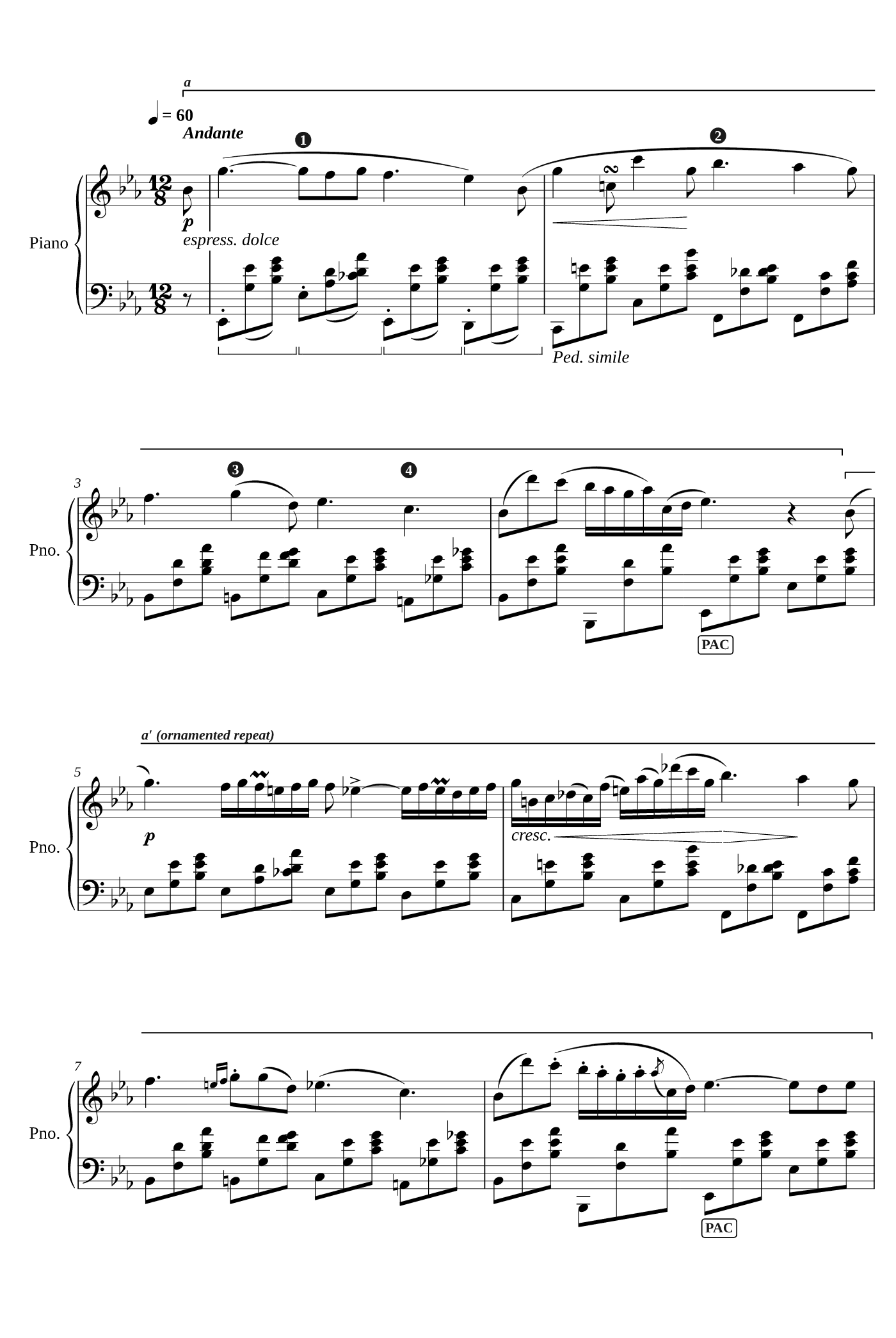
Form
How good is it?
We tested it on 12 well-known pieces, from Bach to Grieg, that music experts had already analysed chord by chord. Then we went through each piece beat by beat and checked whether our analysis said the same thing as the expert: the same chord, in the same key, with the same note in the bass.
- 71% of the beats matched the expert once the chat model had reviewed the analysis.
- 54% matched for the first draft on its own, before the review. The review step makes a real difference.
- Experts don't fully agree with each other either. When three teams of experts analysed the same Beethoven movement, they matched each other on 78% of the beats.
These results were measured with Claude Opus doing the review. Other chat models may do less well.
So treat it like a well-read study partner, not an answer key. It is least reliable in the places where experts often disagree too: when a piece in a major key briefly borrows chords from the minor key, it sometimes says the music has moved into the minor; and music that doesn't follow the usual chord patterns, such as Debussy's, gets looser descriptions.
Get it
- Claude: install Sheet Music Analysis from Claude's directory (web, desktop and mobile). The plugin reads your attached file directly.
- ChatGPT: add Sheet Music Analysis from ChatGPT's plugin directory, then attach your score in a chat.
It is free, needs no account, and shows no ads. See How to use for example prompts and what each mark means.
Support
Questions, wrong analyses worth a look, or problems with a file: support@sheetmusicanalysis.com.